
Biofuels have a smaller impact on the environment
Biofuel production and consumption generally have fewer negative effects on the environment compared with fossil-derived fuels. Government programs that promote or require biofuel use, such as the U.S. Renewable Fuel Standard (RFS) and California's Low Carbon Fuel Standard (LCFS), define the types of biofuels and processes by which they can be produced to qualify under the programs. Although biofuels have fewer effects on the environment than fossil fuels, they do have some effect.
Biofuels emissions
When burned, pure biofuels generally produce fewer emissions of particulates, sulfur dioxide, and air toxins than their fossil-fuel counterparts. Biofuel-petroleum blends also generally result in lower emissions relative to fuels that do not contain biofuels. However, burning biodiesel may result in slightly higher nitrogen oxide emissions relative to petroleum diesel.
Burning biofuel also results in carbon dioxide (CO2) emissions, a greenhouse gas. However, according to international convention, CO2 emissions from burning biofuels are not included in national greenhouse gas emissions because growing the plants (feedstocks) used for biofuel production may offset the CO2 produced when biofuels are burned.
The effect that biofuel use has on net CO2 emissions depends on how the biofuels are produced and if emissions associated with cropland cultivation are included in the calculations. The processes for producing ethanol, renewable diesel, renewable heating oil, and renewable aviation fuel require a heat source, which involves some use of fossil fuels.
Ethanol and biodiesel
Pure ethanol and biodiesel are nontoxic and biodegradable, and if spilled, they break down into harmless substances. However, fuel ethanol contains denaturants to make it undrinkable. Like petroleum fuel, biofuels are flammable (especially ethanol) and must be transported carefully.
Ethanol and ethanol-gasoline mixtures burn cleaner and have higher octane levels than gasoline that does not contain ethanol, but they also have higher evaporative emissions from fuel tanks and dispensing equipment. These evaporative emissions contribute to ground-level ozone and smog. Gasoline requires extra processing to reduce evaporative emissions before blending with ethanol.
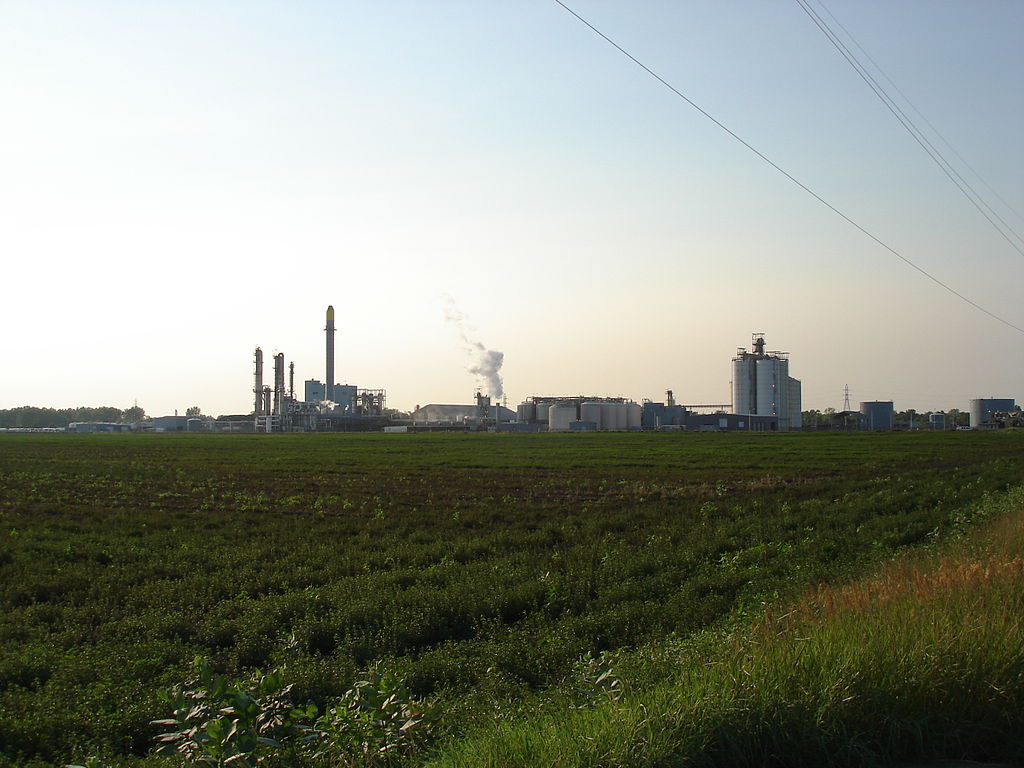
Ethanol production facility in South Bend, Indiana
Source: Photo courtesy of Wikimedia Commons (public domain)

Alternative biofuel feedstocks
Cellulosic biomass
The U.S. government is supporting efforts to produce biofuels with cellulosic biomass, which requires less cultivation, fertilizer, and pesticides than corn or sugar cane, and uses less energy than conventional fermentation. Cellulosic ethanol feedstock includes native prairie grasses, fast-growing trees, sawdust, and even waste paper. However, in the United States, commercial cellulosic ethanol production has technical and economic challenges that have limited it to a still-developing industry.
Lipid feedstocks
Waste or used cooking oil, animal fats, and grease have relatively low carbon intensities as feedstocks for biofuels production, and they can be used to meet the targets for advanced biofuels under the federal RFS program. The total process (or lifecycle) emissions for lipid feedstocks are low because lipids were used for another purpose before becoming biofuel feedstock. Only the emissions related to transporting the lipids after they are collected counts toward total biofuel emissions.
Because of lipids’ potentially lower carbon intensities, some state governments provide more support for biofuels production from lipid feedstocks than from raw, unused vegetable oil feedstocks. In California, lipids account for most of the feedstocks for U.S. non-fuel ethanol biofuels production and for most credits generated under California's LCFS. The federal RFS does not differentiate between lipid and vegetable oil feedstocks like it does with cellulosic and other renewable fuels. At scale, hydrogenated lipid-based biofuels production requires a significant amount of hydrogen, which if produced from fossil fuels, may increase process emissions, which increases the biofuel’s carbon intensity.