
Forecast overview
- Global oil market assumptions. We forecast oil production in the Middle East will rise in the coming months because of gradually increasing flows through the Strait of Hormuz and the use of alternative routes out of the region, according to our September 2026 Short-Term Energy Outlook (STEO). However, we assume some constraints to exporting oil from the Middle East will persist through the end of the year, which keeps crude oil production in the region below pre-conflict averages until the second quarter of 2027 (2Q27).
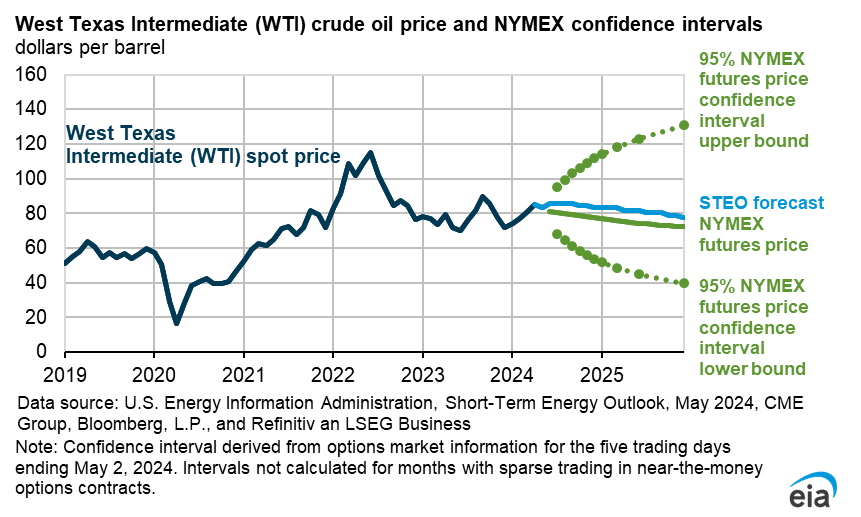
- Global oil prices. Global oil prices rose to an average of $91 per barrel (b) in August, $7/b higher than in July. Prices remain elevated in response to falling global oil inventories, which we estimate have decreased by 400 million barrels so far this year. We expect inventories will continue falling through the end of 2026, which will keep prices near the August monthly average in the coming months. We now forecast the Brent crude oil spot price to average around $90/b in 2H26. As oil production rises into next year, and as inventories rebuild, we expect the Brent spot price to gradually fall to an average of $74/b in 2027.
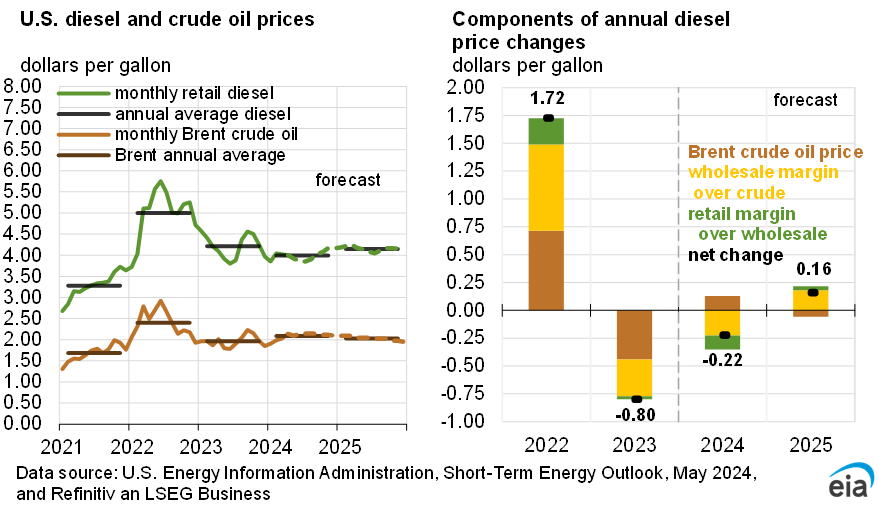
- Distillate fuel oil inventories. We forecast U.S. distillate fuel oil inventories will drop below 100 million barrels in September and will remain below the five-year (2021–2025) low through much of 2027. Tightness in the global distillate market has raised domestic prices and incentivized U.S. exporters to increase distillate exports. We assume global production of distillate fuel will remain below last year’s levels in the coming months, contributing to low U.S. diesel inventories and high diesel prices.
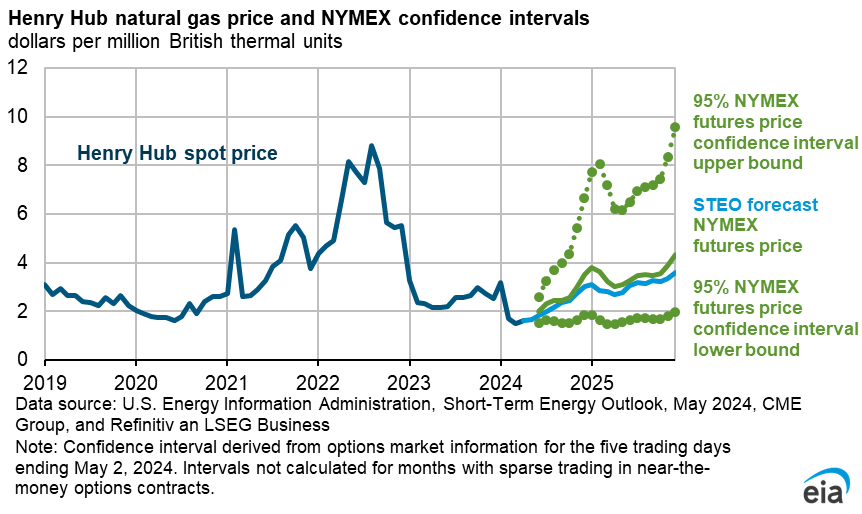
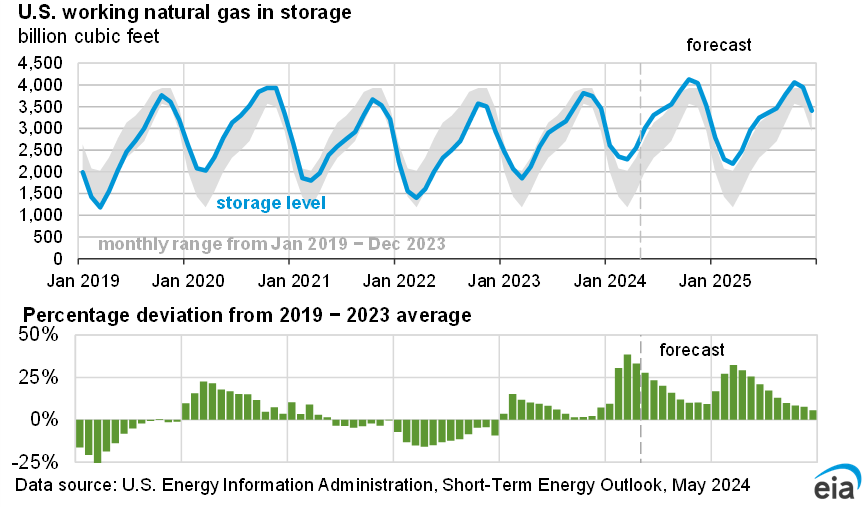
- Natural gas storage. U.S. natural gas inventories are on track to be above the five-year average at the start of winter. We forecast natural gas inventories will total 3,969 billion cubic feet on October 31, 2026—the end of the injection season—5% above the five-year average. Rising natural gas production in the Permian and Haynesville regions has supported inventory builds over the summer.
- Electricity demand. The United States uses record amounts of electricity in our forecast. We expect electricity sales in the United States to total 4,135 billion kilowatthours (BkWh) in 2026 and 4,211 BkWh in 2027, driven by data center development and increased manufacturing activity in the commercial and industrial sectors. Despite a pause in connecting new data center projects in Texas to the grid, the West South Central region accounts for the largest share of total electricity sales growth in our forecast.
- Forecast timeline. We finalized inputs into the model on September 3, 2026. This month’s forecast does not specifically account for market events after that day.
| Notable Forecast Changes | 2026 | 2027 |
|---|---|---|
The current STEO forecast was released September 9. |
||
| Distillate crack spread (dollars per gallon) | $1.57 | $1.25 |
| Previous forecast | $1.30 | $0.97 |
| Percentage change | 20.8% | 28.5% |
| Retail diesel price (dollars per gallon) | $5.07 | $4.40 |
| Previous forecast | $4.85 | $4.07 |
| Percentage change | 4.4% | 8.2% |
| West South Central region electricity sales (billion kilowatthours) | 761 | 790 |
| Previous forecast | 765 | 829 |
| Percentage change | -0.5% | -4.7% |
You can find more information in the detailed table of forecast changes.