Global oil markets
Global oil prices
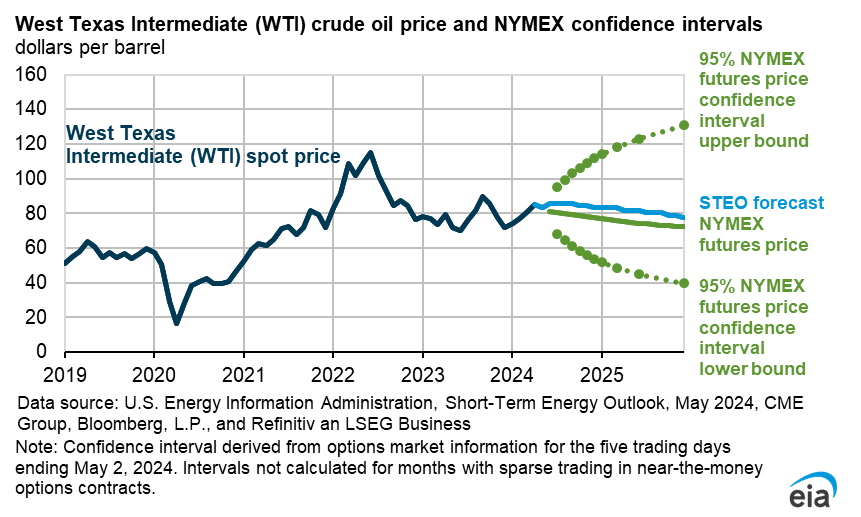
The Brent crude oil spot price increased to an average of $114 per barrel (b) in September, $23/b higher than in August. Prices rose following increased attacks on oil infrastructure and tankers around the Middle East. The most notable among these developments were attacks on Saudi Arabia’s East-West oil pipeline, which temporarily halted flows on a crucial bypass used to circumvent the Strait of Hormuz. Before the attacks, we estimate this pipeline was shipping more than 5.0 million barrels per day (b/d) of oil exports via Saudi Arabia’s Yanbu port on the Red Sea. The disruption of the pipeline led to the daily Brent spot price reaching as high as $131/b on September 15, as buyers scrambled to secure near-term supplies due to the loss of Saudi exports.
Daily prices eased somewhat during the last week of September as the East-West pipeline in Saudi Arabia was repaired and partially resumed flows as of September 22. Some of the decrease in Red Sea exports has been offset by shifting exports back through the Strait of Hormuz. Ship tracking data from Vortexa indicates that oil shipments through the Strait of Hormuz increased slightly in September as Saudi Arabia increasingly used ship-to-ship transfers along Oman’s coast.
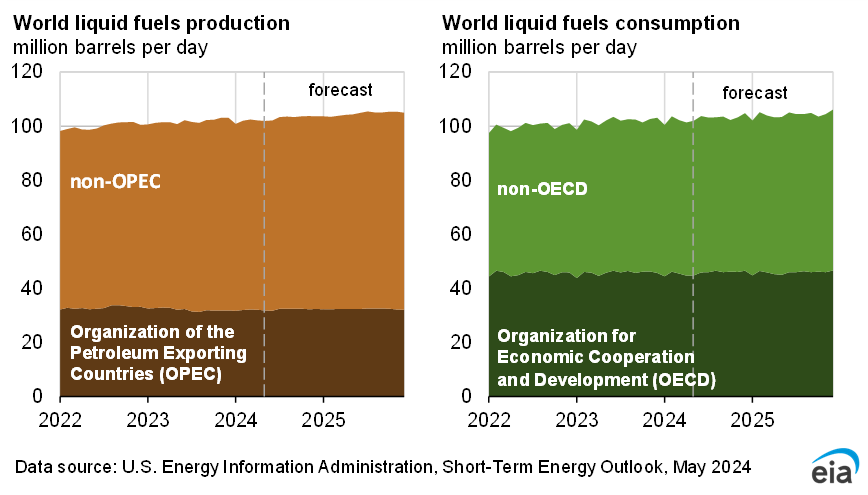
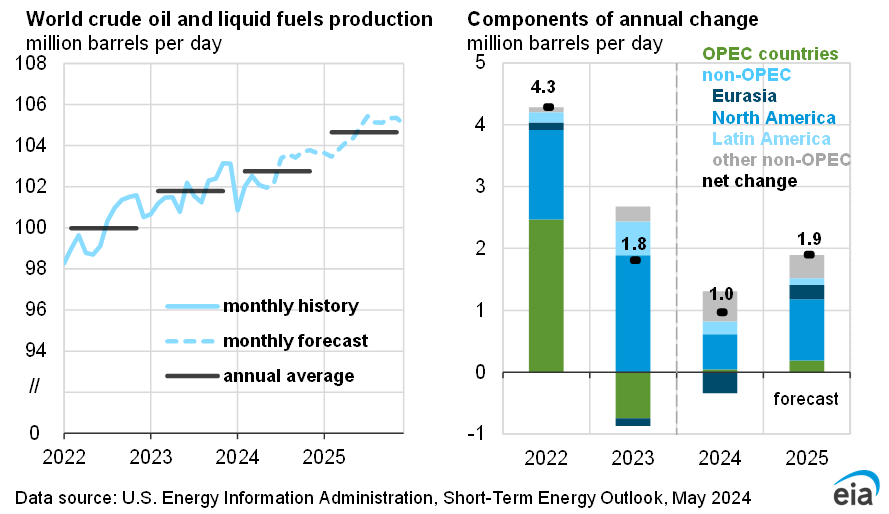
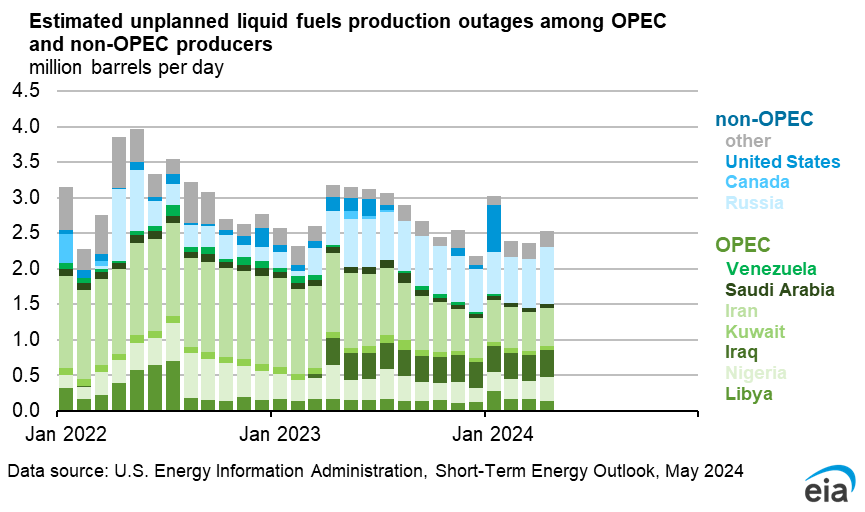
We estimate that oil exports from the Middle East increased in September compared with August despite the increase in attacks, and we estimate that crude oil production shut-ins fell. We assess that crude oil production shut-ins averaged 4.8 million b/d in September, down from 5.8 million b/d in August and down from 10.9 million b/d at the peak in May.
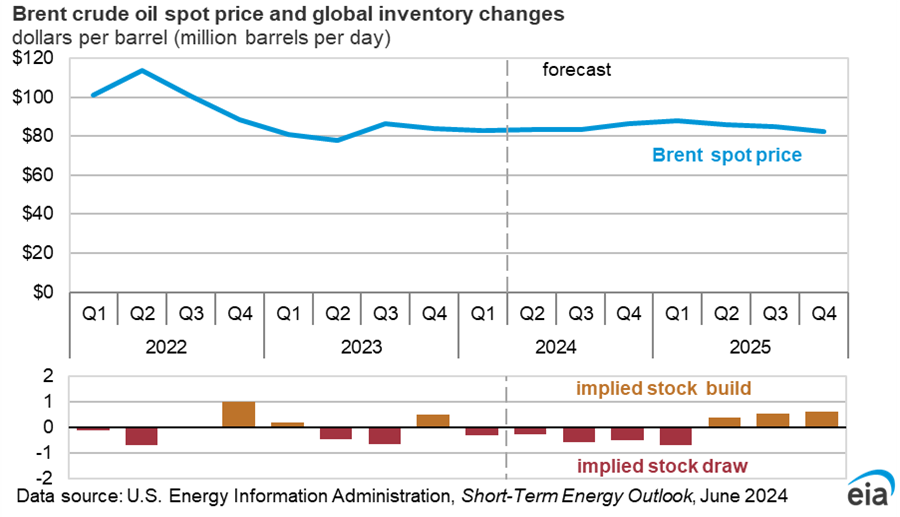
We forecast the Brent crude oil spot price will average $105/b in the fourth quarter of 2026 (4Q26), $14/b higher than in last month’s STEO. We assume that oil flows from the Middle East remain constrained through 4Q26, leading to shut-in production averaging 4.5 million b/d during that quarter. With export routes still constrained, the attacks on the East-West pipeline highlight the potential for continued volatility in physical oil flows and oil prices amid ongoing withdrawals from oil inventories. The heightened risk associated with oil tankers transiting the region has added to shipping costs and increased the risk premium reflected in oil prices. High tanker rates, which reached record levels in September, reflect increasing insurance costs and are putting additional upward pressure on delivered crude oil prices to refiners. Ships are also taking longer routes to avoid conflict zones, which is limiting the number of available vessels.
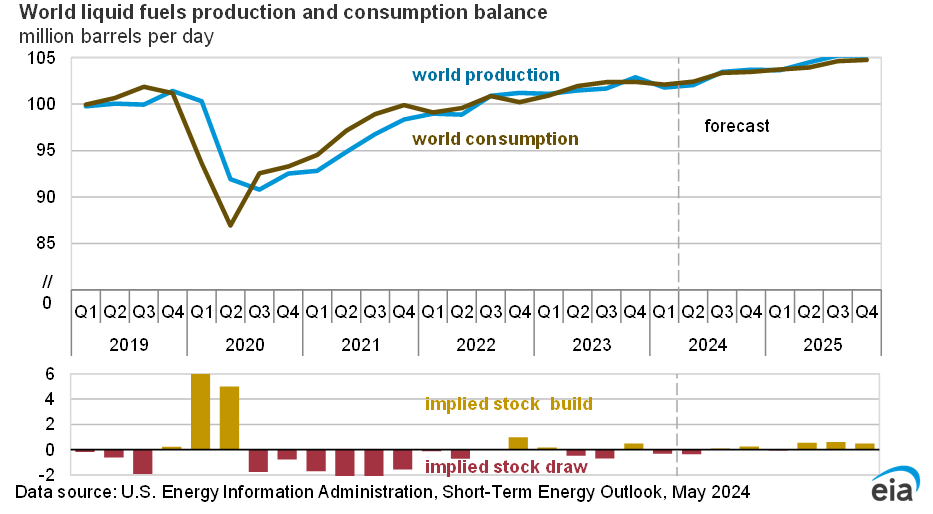
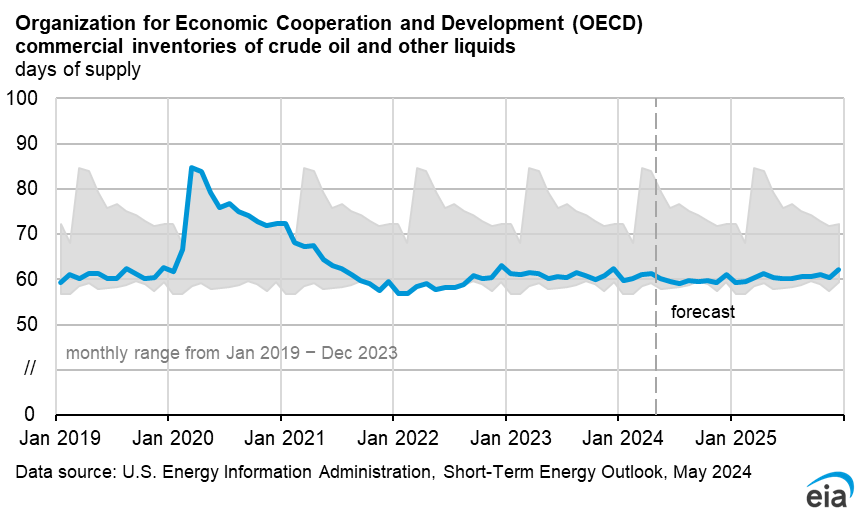
With continued disruptions of crude oil production and high transportation costs and risk premiums, we forecast that oil prices will remain elevated until constraints on oil flows from the Middle East resolve and oil inventories can be replenished. We estimate that global oil inventories fell by an average of 1.9 million b/d in 3Q26 and will fall an additional 0.7 million b/d on average in 4Q26.
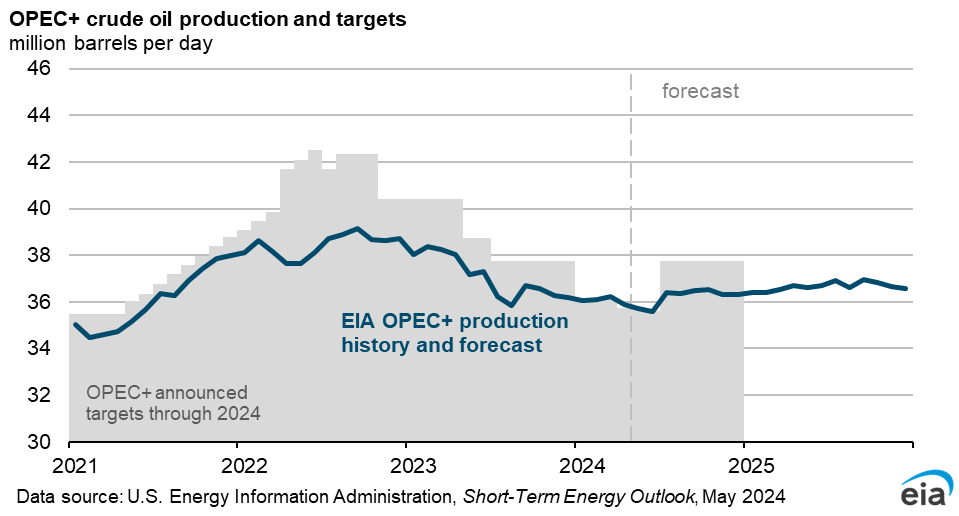
Although we raised our crude oil price forecast from last month, we still expect oil prices will generally fall from their early October average. We assume that the combination of workarounds to export oil from the Middle East (such as pipeline and overland bypass routes, the use of ship-to-ship transfers, and new bypass pipeline capacity expected to come online in 2027 in the United Arab Emirates) will help shut-in volumes gradually fall through the STEO forecast period. We expect the majority of production in the region to return to pre-conflict averages by the end of 2Q27, and we forecast the Brent spot price decreases to an average of $87/b by 2Q27. As depleted global oil inventories build throughout next year, oil prices gradually fall to an average of $74/b in 4Q27. However, we expect the conflict in the Middle East will lead to continued volatility in crude oil flows both through the Strait of Hormuz and through alternative routes, which will likely lead to more volatility in short-term price movements than our forecast indicates.